The State of Minnesota has set clear goals for the transportation system it wants to create, with statewide planning documents shaping a vision for affordability, sustainability, and accessibility.
The Statewide Multimodal Transportation Plan calls for reducing the number of vehicle miles traveled across Minnesota per capita by 14 percent before 2040 and decreasing annual greenhouse gas (GHG) emissions from the transportation sector in the same timeframe. Similarly, the Minnesota Climate Action Framework aims to create a system where “Minnesotans are less dependent on driving to access services and opportunities” and “transportation and housing costs account for less than 45% of household income for all Minnesotans.”
These are laudable goals, given that the transportation sector is the leading contributor to GHG emissions in the state and that Americans with auto loans now spend 15 percent of their income on average, or nearly $13,000 a year, on owning and operating a car.
At the state level, Minnesota has historically been a leader in advancing sustainable transportation options. The state ranks highly on Transportation for America’s Transit Report Card, which assesses the quality of transit support and availability among states. It is also one of the Midwestern leaders in advancing electric vehicle adoption, with support from Drive Electric Minnesota, a coalition facilitated by GPI.
Minnesota has a tool that is currently underfunded and often overlooked, which could reduce vehicle miles traveled, reduce GHG from the transportation sector, and improve affordable mobility options around the state. That tool is shared mobility, including bikeshare, carshare, and microtransit.
Shared mobility can help reduce vehicle miles traveled, expand transportation options, and advance GPI’s goal of decarbonizing the transportation sector. Realizing these benefits requires approaches tailored to local needs and accessible to the people who stand to benefit most. GPI’s work entails examining barriers and opportunities for more equitable access to shared mobility across our work, including in the Twin Cities Bikeshare Equity Study.
A shared vision for shared mobility
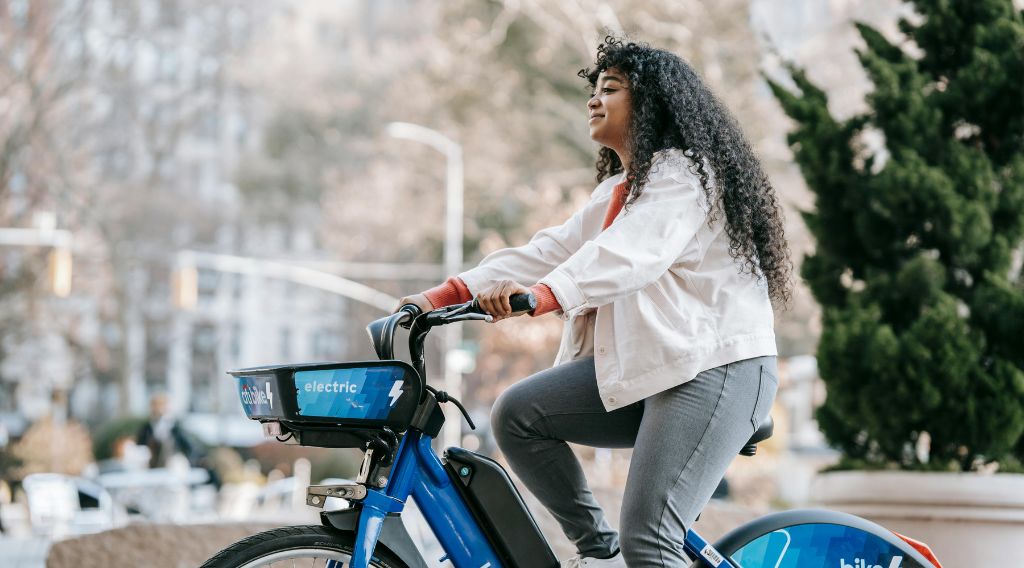
Shared mobility options are continuing to grow in popularity. According to the 7th Annual Shared Micromobility State of the Industry Report from the North American Bike and Scootershare Association, Americans took an estimated 181 million trips on shared micromobility devices in 2025, up from 127 million in 2022—a 42 percent increase. Meanwhile, community carshare systems across the country have continued to grow, providing access to vehicles without the cost of personal car ownership.
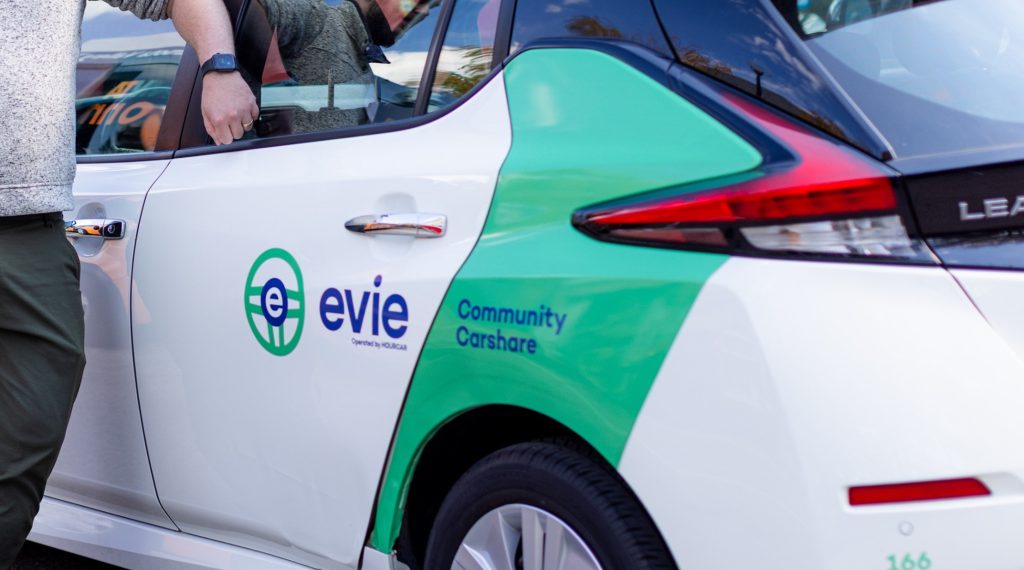
Minnesota is experiencing this boom as well. Minneapolis and Saint Paul are seeing ~1.7 million combined shared bike and scooter trips a year, according to city staff. In 2025, drivers used carshare services HOURCAR and Evie a combined 169,220 times, saving members a total of $23 million in transportation costs and reducing 7,600 tons of GHG.
The state has also shown that the potential of shared mobility is not limited to large urban areas, with the Minnesota Department of Transportation’s Moving Greater Minnesota Forward program helping advance mobility options around the state, including an electric bikeshare pilot in Duluth and Red Lake Nation, an electric shuttle vehicle service for students at Pine Technical College, and a carpooling service in Cottonwood, Murray, and Jackson counties.
The rise in shared mobility offers benefits beyond reduced transportation costs. In a 2026 study, researchers at the University of Minnesota’s Department of Civil, Environmental, and Geo- Engineering developed an “integrated traffic system simulation of the Twin Cities metro-area road network.” They found that shared electric vehicles and micromobility options reduce GHG emissions and improve connections to transit.
Shared mobility depends on reliable funding
Given its proven efficacy, growing need, and alignment with the goals of affordability, sustainability, and access outlined in state-level documents, shared mobility warrants sustainable and predictable funding by the state legislature as part of a comprehensive public transportation system.
When it does not receive such funding, shared mobility services are left to survive solely on shifting private-sector priorities and on whether they can generate profits—a system that has eliminated transportation options for communities in the past.
Minnesota has already experienced the challenges created by funding gaps. Bikeshare system Nice Ride was forced to wind down after being unable to close a $2 million funding gap when Blue Cross and Blue Shield of Minnesota ended its sponsorship support, carshare service Car2Go left the Minnesota market after no longer seeing a path toward profit, and, most recently, HOURCAR announced the sunsetting of operations in October 2026 due to a budget shortfall caused by insurance increases and shifting federal support.
How other states fund shared mobility
While very few states, even those that evangelize green and affordable transportation, explicitly allocate funding to shared mobility options, there are a few examples Minnesota could look to replicate and build on to support shared mobility options and, in turn, its stated values.
While the two models below are grant programs, not the specific, sustainable, legislatively allocated funding needed for shared mobility to thrive, they are excellent examples of creative solutions that have provided real capital and operational funding for shared mobility systems.
Massachusetts’s Microtransit and Last-Mile Transit Grant Program
The State of Massachusetts’s fiscal year 2025 supplemental budget included $10 million to launch the Microtransit and Last-Mile Transit Grant Program, allocating money from the state’s Fair Share income tax surcharge on high-income households.
Massachusetts designed this program to provide transit authorities, municipalities, and nonprofits with funding to expand access to vital first- and last-mile connections for travelers across the state. The program’s inaugural grant recipients show the promise of shared mobility to support mobility in urban, suburban, and rural areas and increase ridership on transit services heavily invested in by the state. Awarded projects include the following:
- $1,300,000 to support Bluebikes, the Boston region’s docked bikeshare system, with ongoing bikeshare operating costs for participating municipalities, and additional stations near transit.
- $3,250,000 to support individual microtransit projects at 14 participating Regional Transit Authorities across the state.
- $1,500,000 to support the City of Northampton’s regional electric bikeshare system, including operating costs and the expansion and replacement of bikes and docks.
Colorado’s Community Accelerated Mobility Project (CAMP)
The Colorado state legislature created the Community Access Enterprise (CAE) program in 2021 to support the adoption of electric mobility options across the state. Through this program, the Community Accelerated Mobility Project funds community-led e-mobility projects in two different phases: the Technical Readiness Planning Phase and the Implementation Phase. The program is anticipated to be funded annually through 2032, as laid out in the CAE Ten-Year Plan. Awarded projects include the following:
- $1,500,000 to support the launch of a regional electric bikeshare system in Boulder County.
- $74,250 to support the development of a Technical Readiness Plan for an electric carshare service in the city of Denver.
- $74,250 to support the City of Boulder and the Boulder Housing Partners in developing a Technical Readiness Plan for a pilot program to provide mobility wallets to affordable housing residents.
Investing in Minnesota’s shared mobility future
By investing in a comprehensive public transportation strategy that includes shared mobility options, Minnesota can once again prove its leadership in sustainable transportation. Adequately funding shared mobility planning, capital, and operations across the state will lead to lower emissions, expanded mobility options, and a more affordable transportation system.
Keep up with GPI on LinkedIn and in our monthly newsletter to see how we are advancing shared mobility and transportation decarbonization across the country.