Across the United States, communities continue to invest in clean energy technologies to meet quality of life and climate goals. One solution to reduce emissions and energy use of buildings is geothermal heat pumps, also referred to as ground source heat pumps (GSHPs).
GSHP systems have been operating successfully in communities nationwide for decades by transferring thermal energy between the ground and a building’s indoor air. Because ground temperatures below the frost zone remain consistent year-round, geothermal systems can heat and cool buildings while reducing reliance on fossil fuels.
However, many communities find it challenging to navigate GSHP project implementation due to complex technologies, high upfront costs, and limited information. Over the past year, GPI has worked with partners in Minnesota to help local and tribal government staff bridge these gaps by facilitating a geothermal work group for peer learning and developing resources to help communities learn from one another.
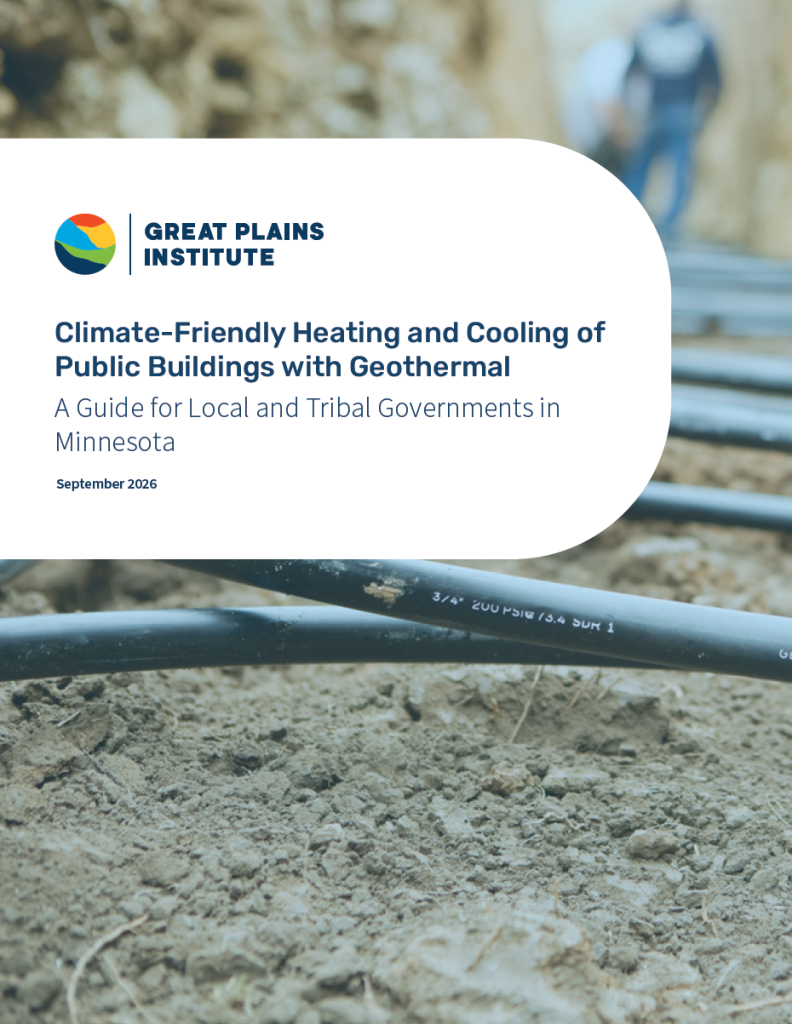
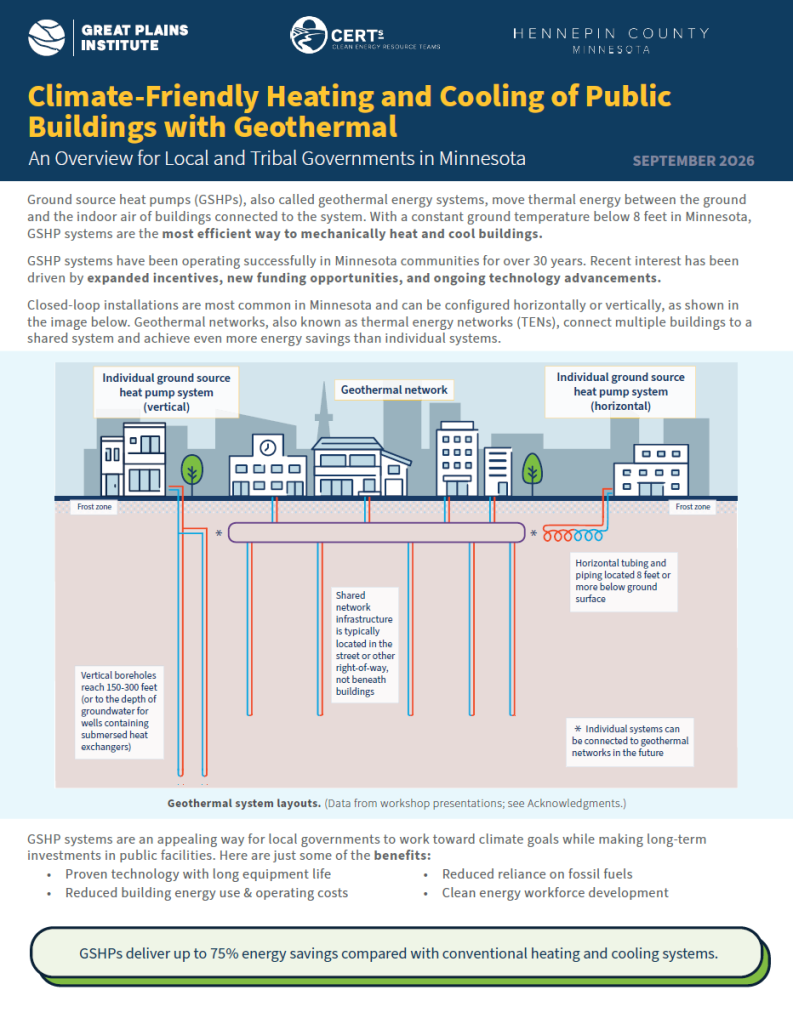
Explore Climate-Friendly Heating and Cooling of Public Buildings with Geothermal: A Guide for Local and Tribal Governments in Minnesota, along with a two-page overview, and learn more about how these resources were developed below.
Minnesota local government geothermal work group
Increasing numbers of Minnesota communities have been exploring and investing in geothermal systems in recent years because of ongoing advances in technology and the current availability of the federal Section 48 ground source heat pump tax credit, which local governments and other tax-exempt entities can leverage through elective pay, also known as direct pay, to cover at least 30 percent of the cost of a GSHP system.
Local government staff who participate in the Minnesota Community Energy Network, co-facilitated by GPI and Clean Energy Resource Teams (CERTs), expressed interest in learning more about geothermal opportunities from technical experts and peer communities. In response to this interest, GPI partnered with Hennepin County and CERTs to launch a geothermal work group in August 2025 for Minnesota local and tribal government staff.
The work group kicked off with a series of six workshops funded by a Catalyst Fund grant from the Urban Sustainability Directors Network (USDN). Meeting topics were informed by participants and covered geothermal technologies, Minnesota project examples, utility programs, financing and funding opportunities, and a tour.
The geothermal work group has been a success so far: in a survey, 10 communities reported being more likely to advocate for geothermal projects in their communities as a result of participating in the work group, and most respondents reported increased familiarity with geothermal technologies.
The work group consists of 60 local and tribal government staff and partners, representing 24 communities from across Minnesota, and continues to be funded by the Minnesota Department of Commerce State Competitiveness Fund and the McKnight Foundation.
As a result of the success of the initial work group series and participants’ continued interest, GPI, CERTs, and Hennepin County will continue facilitating the work group for the foreseeable future.
Geothermal resources for local and tribal government staff and elected officials
To further help staff and elected officials advance GSHP projects in their communities, GPI created two resources that incorporate information gathered through the initial six workshops and are informed by work group participants.
Climate-Friendly Heating and Cooling of Public Buildings with Geothermal: A Guide for Local and Tribal Governments in Minnesota aims to provide staff from Minnesota cities, counties, schools, and tribal nations with information to help them advance GSHP systems for heating and cooling public buildings. The 25-page guide covers the following:
- Common system types implemented in public buildings
- Individual benefits and community impacts
- The process for implementing individual and networked systems
- Funding and financing strategies
In addition, a two-page overview of the guide provides a quick summary for local elected officials and others interested in high-level information about geothermal system types, benefits, track records in Minnesota, and funding opportunities.
While the primary focus of both resources is on single-building systems, they provide some information on geothermal networks, a type of thermal energy network, which are growing in popularity in Minnesota and across the country.
Geothermal opportunity for communities nationwide
While both resources contain examples of geothermal projects in Minnesota, the content is relevant to local and tribal government leaders across the country who want to reduce building emissions, energy use, and operating costs.
At a time when communities can recoup at least 30 percent of project costs for GSHP systems, communities across the country can use these resources to explore whether geothermal is the right heating and cooling option as they make long-term investments in public buildings.
Are you a Minnesota local or tribal government staff member or elected official interested in advancing local climate and clean energy goals? Check out the Community Energy Network and Minnesota Cities Climate Coalition. Are you interested in replicating this work in other states? Contact us at [email protected].