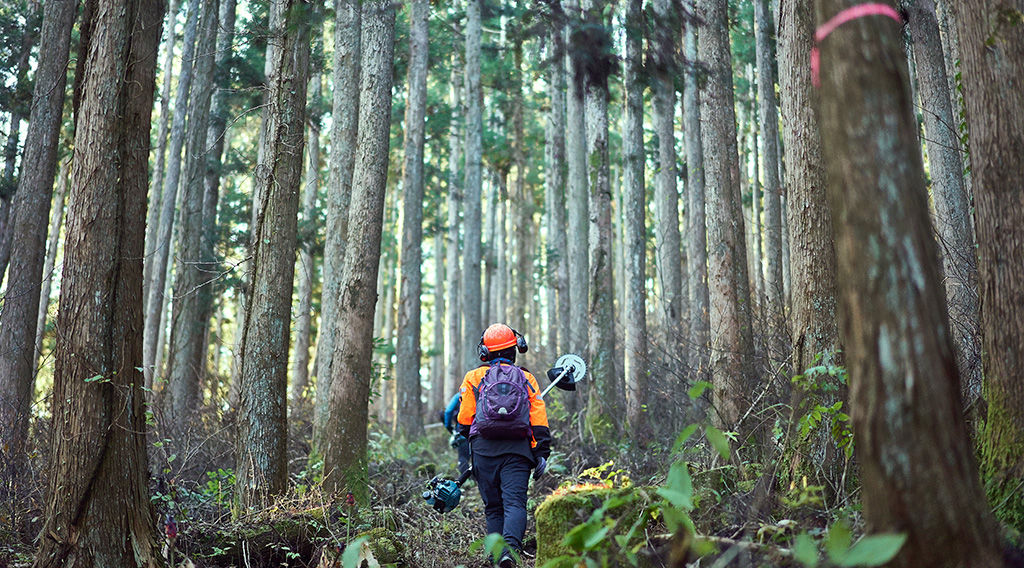
Natural and working lands are lands that specifically derive value, either economic or cultural, through their inherent ecosystem services or their economic production when worked through agricultural processes. They can range from protected beaches and wetlands to farms that produce the US’s food supply.
Natural and working lands offer a rare opportunity to address climate change while producing food and materials, improving water and soil resources, reducing wildfire risk, and strengthening rural economies. Targeted investment can turn proven practices into durable systems—connecting land management, technical assistance, markets, infrastructure, and measurement tools at the scale required to deliver meaningful results.
Nearly 51 percent of the land base in the United States is used for agriculture, representing a significant opportunity to scale natural climate solutions across the country and at the state level. Through its natural and working lands work, the Great Plains Institute collaborates with landowners, businesses, agencies, and communities to advance practical strategies that reduce greenhouse gas emissions, strengthen resilience, and create durable economic opportunities.
Agriculture: Persistent emissions and significant opportunity
US agricultural emissions increased from 581.8 million metric tons (MMT) of carbon dioxide equivalent (CO₂e) in 2005 to 593.4 MMT CO₂e in 2022 and continue to account for approximately 9 percent of total US emissions. Agricultural soil management, particularly nitrogen fertilizer and manure application, accounted for nearly half of the sector’s emissions in 2022. Enteric fermentation and manure management were the other major sources.
These trends underscore the importance of reducing emissions from biological systems. Unlike fossil-fuel emissions, agricultural emissions arise from dispersed and variable processes tied to soils, weather, livestock, and food production. Solutions must therefore be locally appropriate, economically viable, and, ultimately, integrated into operational practices.
Forests: Maintaining a powerful carbon sink
Forests typically remove more carbon dioxide from the atmosphere than they emit as trees grow, and carbon accumulates in vegetation, soils, dead wood, and harvested wood products. For example, Minnesota’s forests sequestered approximately 21.5 MMT CO₂e in 2022—equal to about 15 percent of the state’s gross emissions. This annual forest sink has strengthened by roughly 20 percent since 2005, largely because of forest growth and expansion. This is not the case for every state, for example, in Colorado, forests are a net source of carbon emissions due to the increasing frequency and severity of climate-exacerbated disturbance.
Nationally, land use, land-use change, and forestry removed approximately 854 MMT CO₂e from the atmosphere in 2022, offsetting about 13 percent of gross US emissions. Forest lands account for most of that removal.
Maintaining this sink cannot be taken for granted, however. Development, forest conversion, invasive species, drought, wildfire, and changes in forest age and health can reduce sequestration or turn individual landscapes into net emission sources.
Climate-smart management connects mitigation and resilience
Climate-smart agriculture and forestry can reduce emissions, increase carbon storage, and strengthen ecosystem resilience. In agriculture, practices such as improved nutrient management, cover crops, reduced tillage, perennial vegetation, and agroforestry can lower emissions while improving soil health, water quality, and farm resilience. In forests, climate-smart management focuses on maintaining forest cover, restoring degraded stands, improving regeneration, managing pests and invasive species, and targeted management to sustain healthy forests and carbon stocks over the long term.
Forest management and wood manufacturing also generate low-value wood and residuals that often lack viable markets. A stronger forest bioeconomy can put these materials to productive use through engineered wood, biochar, renewable fuels, and other biobased products. Expanding markets for low-value wood can help offset the costs of forest restoration and hazardous fuel reduction while supporting rural businesses, jobs, and more resilient forest landscapes.
GPI’s natural and working lands work
Through its natural and working lands efforts, GPI supports state climate planning and implementation. We also bring together agencies, land managers, agricultural and forestry stakeholders, and other partners to identify practical pathways and solutions to reduce emissions and strengthen resilience, such as on-farm practices, wildfire resilience practices, tree nursery supply, and markets for underutilized wood.
GPI also facilitates the Bioeconomy Coalition of Minnesota, which brings together stakeholders across the bioeconomy value chain to advance new markets for agricultural and forest resources through research, policy development, information-sharing, and industry collaboration.
Together, these efforts demonstrate GPI’s approach to natural and working lands: moving beyond individual practices to build partnerships that allow climate-smart agriculture, sustainable forest management, and the bioeconomy to deliver durable climate, economic, environmental, and community benefits at scale.