Electric vehicles (EVs) are becoming an increasingly common sight on our roads. Yet, for many drivers, the idea of switching to an EV still comes with its fair share of questions and anxieties.
With EVs resulting in fewer emissions over their lifecycle and no tailpipe emissions, they are an important tool for meeting climate goals and improving air quality. Paired with the cost savings over time, many people are interested in EVs. GPI staff get to work in many ways: taking public transit, biking, and driving (and carpooling). Many staff members who drive have switched to EVs over the years.
In this post, we share their experiences to help you decide whether choosing an EV is the right choice for your lifestyle.
Why GPI staff choose to drive electric
GPI EV drivers have a variety of reasons for choosing to drive electric. Some were incentivized to purchase using tax credits, while others found leasing an appealing reason to try out owning their first EV.
“We found a great lease deal at the time. We started with a lease because we wanted to make sure we were feeling good about the technology, and the lease price was better than purchasing,” said Katelyn Bocklund.
Some also discussed the benefit of getting around the city with no tailpipe emissions, even if it meant adding an EV as their household’s second vehicle rather than making a full transition away from a conventional vehicle.
“After conducting a study on the difference in lifecycle emissions between a conventional vehicle and an electric vehicle, I couldn’t see gasoline vehicles the same way. I started to feel really guilty about driving my old gasoline car and knew that the next car I bought would have to be an EV,” shared Gabrielle Olson.
Smooth and quiet driving experience, saving on fuel, and low maintenance were also among the perks GPI staff brought up in the conversation. Some unexpected advantages also included features like the convenience of home charging and prewarming the vehicle.
“When I got my EV, I had a baby and a toddler, and it was nice not to have to stop at gas stations in the Minnesota winter. It’s also very convenient, especially with an infant, to warm up the car in the morning. Even 10 years ago, I was able to just use an app on my phone to warm up my car in the garage safely, which I couldn’t do with my gas car,” said Jennifer Christensen.
GPI staff’s experience with charging electric vehicles
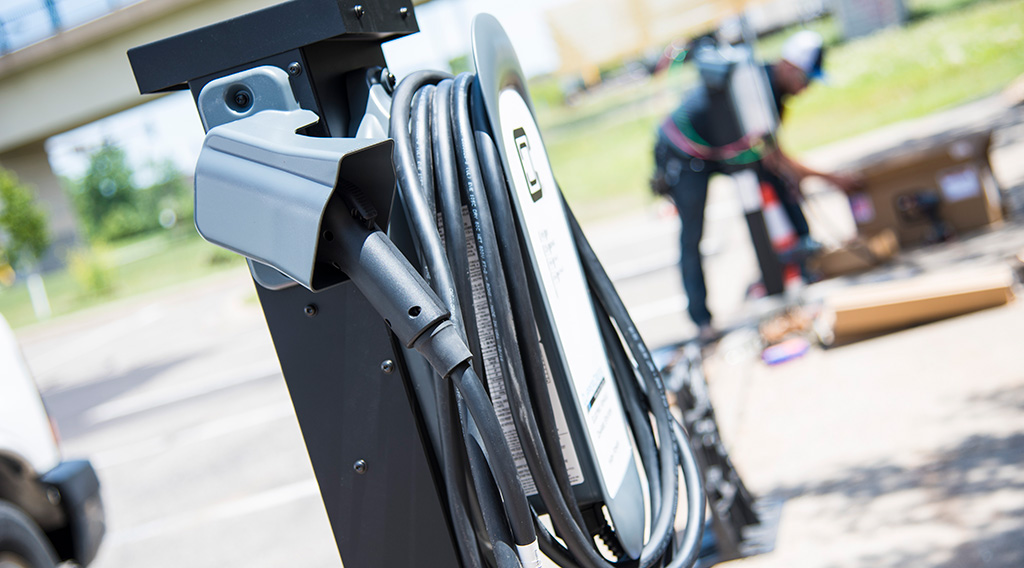
EV owners have three charging options. The first type is Level 1 chargers, which connect to a residential outlet at 120 volts. According to the US Department of Transportation, these chargers, also described as trickle chargers, can take up to 50 hours to charge an EV from empty to 80 percent. Level 2 chargers deliver 240 volts and charge EVs at a faster rate, allowing them to go from empty to 80 percent in 4–10 hours. The third type of charger is a direct current fast charger that charges EVs quickly, in about an hour. Level 1 and 2 chargers are more widely used than direct current fast chargers and are commonly installed in homes (homes and many garages already have 120-volt outlets).
Most GPI EV owners live in single-family homes and can charge at home. Some of them also use Level 2 charging at the GPI office. When it came to installing Level 2 chargers, experiences varied.
“It was really easy and cheap. My utility reimbursed me for part of the cost [of installing a Level 2 charger], and I would say my electricity bill cost maybe a quarter of what we were spending on gas fuel before,” recalled Tricia Treece.
Rolf Nordstrom also installed a Level 2 charger at home, but his experience was more challenging: “It wasn’t terrible, but unless you were prepared to use one of the two Level 2 chargers that our utility had on offer, which I didn’t want, there wasn’t really an easy button for lining up which electrician I should use, and which EV charger I should order.”
For Jennifer, her family has been able to use the regular 120-volt outlet already installed in their garage. They plug their 2016 EV hatchback in at night, so it’s fully charged in the morning.
But what about EV charging if you don’t have a charger at home?
“I live in an apartment that does not allow me to charge by plugging into any outlet, so I rely solely on public charging. The charger at my local library is 100 percent wind-powered, so I know that all the electricity going into my car comes from renewable energy sources,” said Gabrielle.
While it can take some time to find a public place to charge repeatedly, Gabrielle found the local mall to be a great option, too.
EV ownership challenges improve with more charging infrastructure, larger battery range
There are still challenges that come with owning an EV. Some GPIers mentioned that since the charging network can still be sparse in some regions, locating a charger when far from home can be challenging and require additional planning for road trips.
Newer EV models, however, can also travel further on a single charge. A person’s worry about being stranded if their EV runs out of charge mid-drive is called range anxiety.
Although range anxiety remains a concern, GPI staff found that it was not a major barrier to driving an EV. They explained that while their driving patterns have changed, they can still go about their daily lives with an EV. As EV ranges continue to improve each model year, GPI EV drivers take longer road trips and make fewer charging stops. In recent years, charging infrastructure has also improved through programs like the National Electric Vehicle Infrastructure (NEVI) Formula Program and the Charging and Fueling Infrastructure Grant Program.
Winter weather can also negatively affect some EVs’ mileage. “My 2016 model was not great in the snow. Getting new tires really helped. My range goes down in the winter, so eventually, I will need to get an updated EV or replace the battery,” noted Jennifer.
While winter driving can be challenging for all vehicles, newer EVs can perform as well or even better than gas cars when it comes to traction and “can be more stable due to advanced traction control, all-wheel drive options, and the weight distribution from battery packs.”
Ultimately, it depends on the driver’s individual needs. “I’m not going to push an EV until I learn about someone’s lifestyle, their daily driving needs, and what they’re looking for in a car. Electric vehicles can work for a lot of people, but ultimately, I don’t want someone to have a bad experience,” said Katelyn.
For GPI EV drivers, electric is the way to go
There are many factors to consider when buying or leasing an EV, including personal driving preferences and access to charging. These stories from GPI staff show a range of lifestyles and that, even within the variation of people’s lives, EV ownership is not only feasible but also enjoyable, convenient, and often surprisingly simple.
“I would say the everyday convenience far outweighs those minor inconveniences that are less frequent. You won’t regret it!” said Carolyn Berninger.
Whether you’re ready to make the switch now or simply exploring your options, we hope these insights help you feel more informed and confident as you consider your next vehicle. If you are looking to learn more, read this Q&A with one of our EV specialists or check out this resource to calculate your personal EV cost savings and emissions reductions.