 A recent webinar hosted by the Great Plains Institute explored the growing connection between solar energy development and water quality, often called the solar/water nexus. Interest in the webinar spanned the globe, with over 240 people registering from 38 states and 6 countries. State and local government staff made up nearly half of attendees, with the remainder representing solar developers and engineering/construction firms, energy or environmental nonprofits, local or state government officials, educational institutions, and interested community members.
The central message was that solar projects can provide significant water quality benefits, but those benefits depend on intentional choices about where and how projects are sited, designed, constructed, and managed. They do not happen automatically.
Read on to learn about the main takeaways from the webinar.
Understanding the research on the environmental impacts of solar
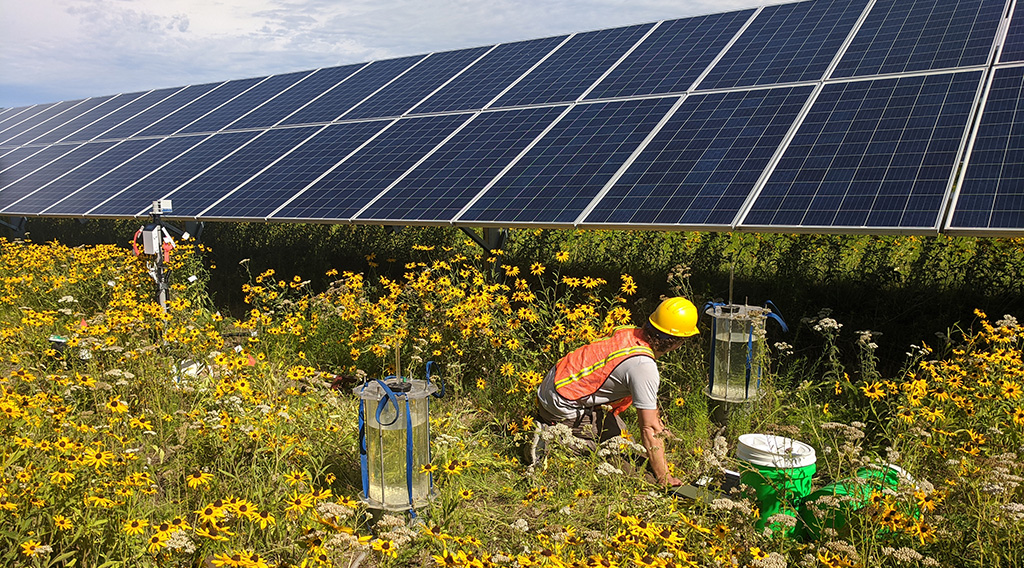
Dr. David Mulla, professor and Larson Endowed Chair in Soil and Water Resources at the University of Minnesota, highlighted several years of research through the PV-SMaRT and PV-SuCCESS projects, which examined stormwater runoff, soil health, groundwater, nitrate leaching, and other ecosystem impacts at solar facilities across the United States. Dr. Mulla’s team studied real-world sites with different soils, climates, topography, vegetation, and solar designs to better understand how water moves through solar facilities and which factors most influence runoff. The goal was to develop science-based practices to improve water quality while providing clearer, more predictable pathways for solar development and regulation.
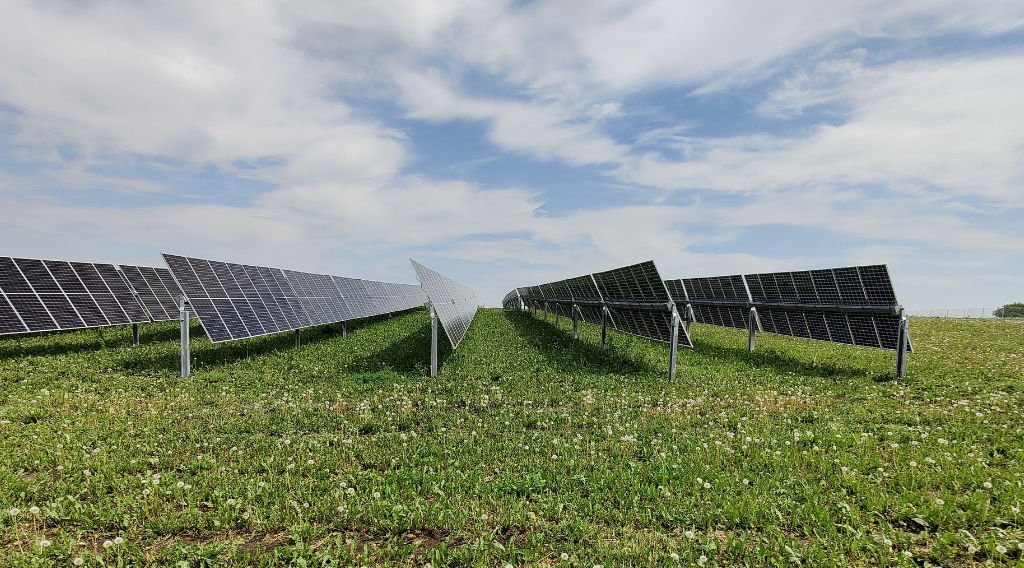
One important finding is that well-designed solar facilities can produce less runoff than the agricultural land uses they replace, particularly when projects establish healthy perennial vegetation. At the same time, research showed that factors such as soil compaction, shallow soils, vegetation quality, panel spacing, and array orientation can, if not accounted for, significantly increase runoff. This means that careful site selection and design can reduce the need for expensive structural stormwater controls while improving environmental outcomes.
The research also challenges the assumption that solar facilities should be treated as impervious surfaces. Solar panels are impervious, but because they are disconnected from water bodies and conveyance systems, rainfall can infiltrate the vegetated ground beneath and between arrays. The hydrology of a solar site is more complex than that of a typical development, both disconnected and three-dimensional.
The research team developed a solar farm runoff calculator to help developers, engineers, and regulators evaluate site-specific conditions and test how design choices and site conditions can affect expected runoff. The tool is already being used across the country, including in state and local permitting.
Creating community co-benefits through solar
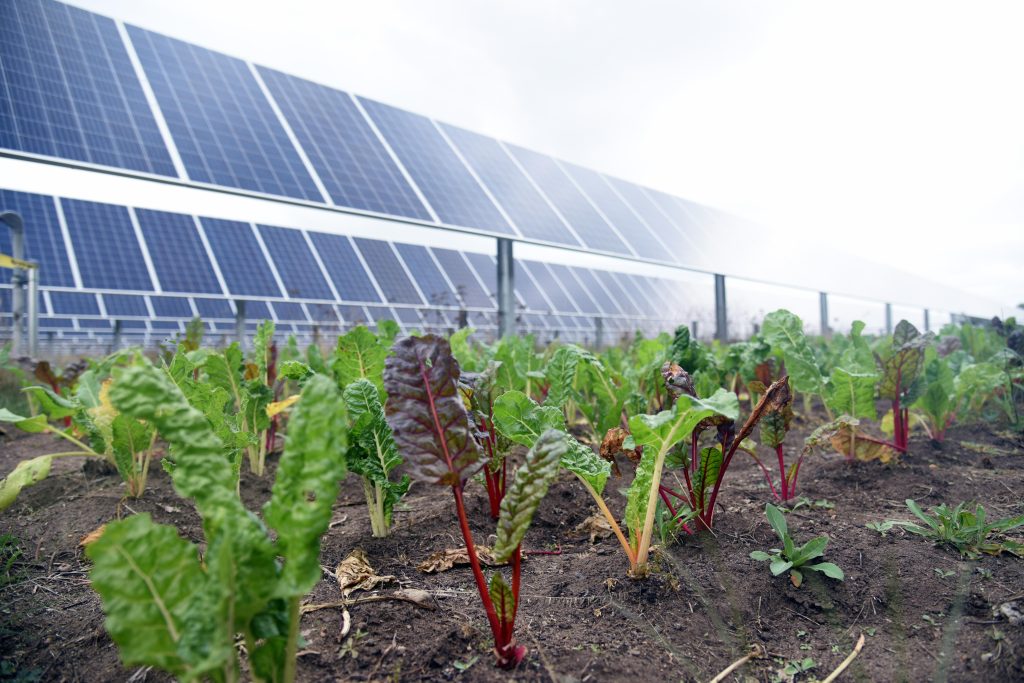
The webinar also emphasized an opportunity to move from simply meeting regulatory requirements to creating measurable community co-benefits. These benefits may include protecting or restoring impaired surface waters, improving soil health, supporting habitat, increasing carbon storage, and protecting groundwater and drinking water supplies. Solar development can help achieve community water and natural system goals if developers, permit officials, and local or state decision makers choose to make it a priority.
This opportunity may be especially important in agricultural areas facing nitrate contamination in drinking water. The field research conducted on solar farms documented nitrate flows that are substantially lower than those at sites under conventional agriculture.
The Great Plains Institute is working with the Minnesota Department of Health and other partners to explore encouraging strategic solar siting on vulnerable drinking water recharge and wellhead protection areas, providing an alternative land use to nitrogen-intensive agriculture. The approach could protect groundwater and drinking water (and provide surface water benefits) while delivering significant economic returns to landowners through a solar lease.
Prioritizing water quality early
For local governments, regulators, and solar developers, the practical takeaway is that water quality should be considered early—during site selection and project design—not just during and after construction.
Maintaining soil health and soil depth, avoiding compaction, establishing deep-rooted vegetation, and incorporating site-specific hydrology into planning and design can reduce stormwater runoff and create other long-term community environmental benefits.
Rethinking renewable energy development
Ultimately, the webinar showed that the solar-water nexus offers a broader way to think about renewable energy development. Solar projects can be more than a source of clean electricity. With science-based, intentional planning, they can also become a tool for protecting water resources, improving soil and ecosystem health, and delivering tangible co-benefits to the communities that host them.
Watch the recording and contact us if you are interested in learning more about the solar/water nexus.