


A new report lays out how Minnesota can link solar power with electric vehicle (EV) charging and enable the state to maximize both technologies’ broad benefits. Leading a project team that included utilities, EV and solar industries, local governments, state agencies, and clean energy advocates, the Great Plains Institute developed the report on capturing the synergies that can be realized through solar plus EV applications. The report presents the detailed case for solar plus EV synergies, the barriers and opportunities for capturing them, and the needed next steps for a market transformation effort.
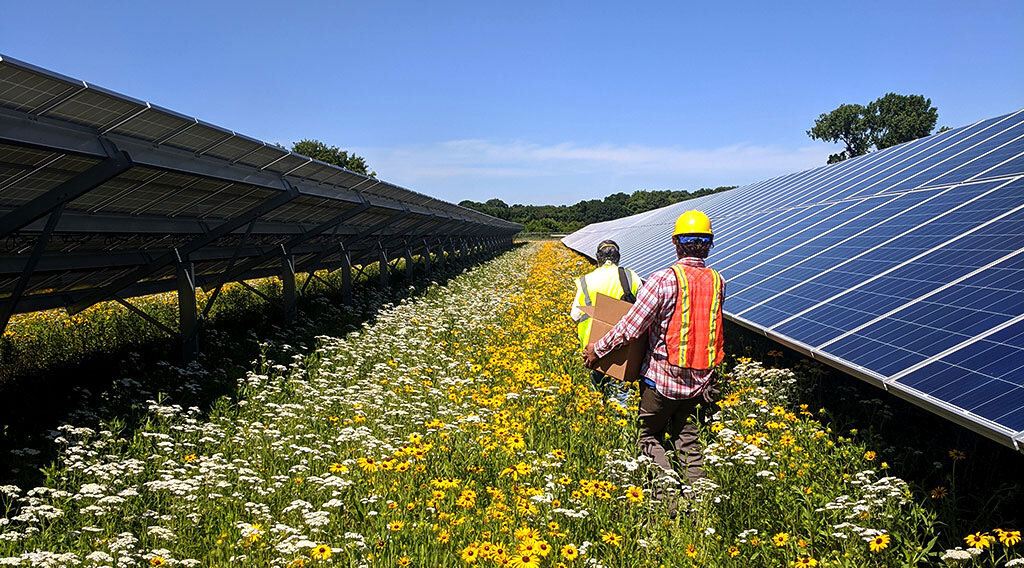 Solar energy is not only important to reaching a zero-carbon energy system—solar projects can, with appropriate siting and design, also deliver many benefits to local communities where projects are sited. Deploying the level of solar needed to decarbonize our economy will require addressing siting and regulatory processes which are increasingly a barrier to solar project development. The Great Plains Institute is fostering a new paradigm in the deployment of community- and utility-scale solar development; what we call the co-benefits approach to solar. We’re working with state, regional, and national partners to identify how energy development can both help solve the climate crisis and deliver local benefits to the host community.
 The Great Plains Institute is engaging local governments across the Upper Midwest on long-term planning for renewable energy. As part of this effort, we developed a guide to provide communities in Wisconsin with an overview of long-term utility- and community-scale solar and wind development—systems sized one megawatt (MW) or greater.
  The Great Plains Institute is engaging local governments across the Upper Midwest on long-term planning for renewable energy.


 More communities than ever are using solar energy thanks in part to a program that makes it easier for local governments to make the switch to sun. The Great Plains Institute (GPI) led the Upper Midwest cohort of communities seeking
