Communities in Minnesota Earn SolSmart Silver Designations by Working as a Cohort

February 10, 2026 in Renewable Energy Author: Sydne Tursky

Minnesota communities in Hennepin County recently worked to lower energy costs and deploy cleaner, more resilient energy options by streamlining solar zoning and permitting processes. As a result of their work, they achieved Silver designation from the SolSmart program, which provided free technical assistance and recognition to communities on their path to supporting local solar projects (SolSmart is part of the broader Energy Ready program suite). Continue reading »

Report: Unlocking the Potential of Distributed Green Ammonia for a Sustainable Rural Agricultural Future

January 16, 2026 in Renewable Energy Author: Val Stori

Distributed green ammonia (DGA) fertilizer, produced on-farm or within agricultural regions, offers several benefits that not only support sustainable agriculture but also provide local economic benefits and enhanced supply security. A new report prepared by the Great Plains Institute for the Hydrogen Economy Collaborative, Distributed Green Ammonia: Demonstrating Modular Systems for Sustainable Agriculture, highlights the regional economic benefits that DGA production can bring to agricultural regions. Continue reading »

Hydrogen Economy Collaborative: Reflections and Future Outlook

February 26, 2025 in Renewable Energy Author: Dreek Morgan

The Hydrogen Economy Collaborative (HEC) is a network of state agencies, researchers, environmental nonprofit organizations, and industry professionals working to advance the role of low-carbon hydrogen in the clean energy transition. GPI facilitates the HEC as a platform to foster collaboration and knowledge-sharing on policy, technology, and market developments to advance low-carbon hydrogen adoption. Continue reading »

Advancing Low-Impact Solar Development on Brownfields

October 14, 2024 in Renewable Energy Authors: Brian Ross, Dreek Morgan

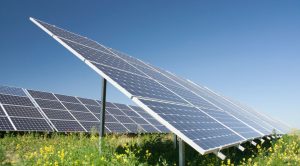
Image of a solar panel in a field

Rapid development of distributed (small-scale) and large-scale solar energy projects is essential to accelerating the transition to net-zero carbon emissions in a way that delivers equitable, broad benefits to communities. The National Renewable Energy Laboratory and others have demonstrated there are ample suitable lands to achieve ambitious large-scale solar deployment goals, enough to power millions of homes annually. Continue reading »

Expanding Solar Access to Underserved Communities Through SolSmart: A Solar Equity Case Study

July 16, 2024 in Renewable Energy Authors: Maya Chilcote, Val Stori

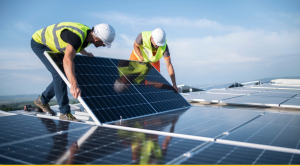
Two workers installing solar panels on a roof

A new report by GPI staff for the national SolSmart program, Expanding Solar Access to Underserved Communities Through SolSmart, focuses on centering solar equity as a key principle of solar programs and policies. Centering solar equity will not only make solar energy more accessible but also distribute meaningful benefits to disadvantaged communities. Continue reading »

Issue Brief Outlines Hydrogen Transportation Barriers

June 13, 2024 in Renewable Energy Authors: Dreek Morgan, Val Stori

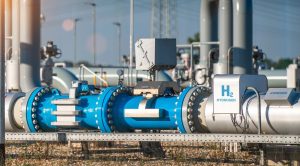
As the world’s energy landscape evolves, clean hydrogen emerges as a promising solution for achieving clean, net-zero carbon energy. Hydrogen transportation has also emerged as a key challenge to address in the energy space. A new issue brief from a work group of the Hydrogen Economy Collaborative (HEC), convened by GPI, focuses on these challenges and highlights opportunities to address them. Continue reading »