
Planning, Zoning, and Permitting
As part of Solar Ready Iowa, toolkits have been assembled to equip local governments in Iowa with information regarding solar development as it relates to planning, zoning, and permitting. The toolkits were created in 2016, then model ordinances are being updated in 2020 to reflect new best practices and lessons learned since 2016. Minnesota and Iowa are updated and Illinois and Wisconsin are in process, with ordinance for Indiana and Michigan under development. The purpose of these toolkits is to provide resources that will assist communities in addressing barriers to solar energy installations in a manner tailored to each community’s needs. The following is a summary of materials that can be found in each of the toolkits. Continue reading »


 The Great Plains Institute works with local governments across the Midwest, and nationally, to help communities prepare for utility-scale renewable energy development. We’ve partnered with counties to host workshops across the Midwest and developed several guides tailored to states in the region. Through these conversations with local government staff, elected officials, and community members, we heard about similar concerns and the need for more information on specific topics related to utility-scale solar and wind siting.
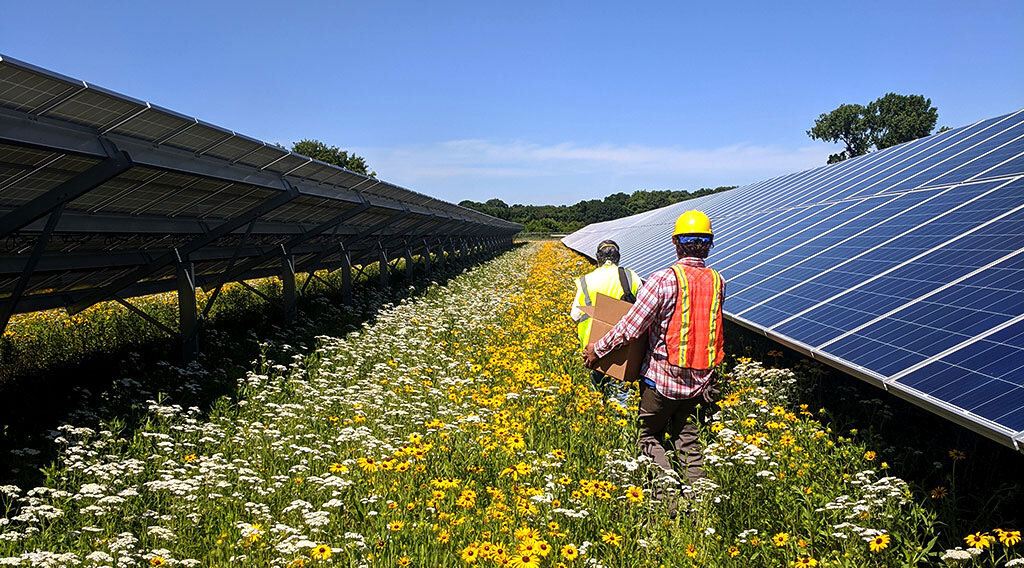 Solar energy is not only important to reaching a zero-carbon energy system—solar projects can, with appropriate siting and design, also deliver many benefits to local communities where projects are sited. Deploying the level of solar needed to decarbonize our economy will require addressing siting and regulatory processes which are increasingly a barrier to solar project development. The Great Plains Institute is fostering a new paradigm in the deployment of community- and utility-scale solar development; what we call the co-benefits approach to solar. We’re working with state, regional, and national partners to identify how energy development can both help solve the climate crisis and deliver local benefits to the host community.