
Members of the Midcontinent Transportation Electrification Collaborative (MTEC) this week sent a letter to Congressional leaders outlining a suite of recommendations for how clean transportation investments can support economic recovery, job creation, and provide environmental and public health benefits. Facilitated by GPI, MTEC works to increase electric vehicle (EV) use, build infrastructure to support EV travel, decarbonize the transportation sector, and improve air quality and electric system efficiency. MTEC is composed of representatives from state government, electric utilities and cooperatives, charging companies, and environmental organizations. You can read the collaborative’s full letter below.
July 23, 2020
The Honorable Mitch McConnell
Majority Leader
United States Senate
Washington, D.C. 20510 |
The Honorable Chuck Schumer
Minority Leader
United States Senate
Washington, D.C. 20510 |
The Honorable Nancy Pelosi
Speaker
U.S. House of Representatives
Washington, D.C. 20510 |
The Honorable Kevin McCarthy
Minority Leader
U.S. House of Representatives
Washington, D.C. 20510 |
Continue reading »


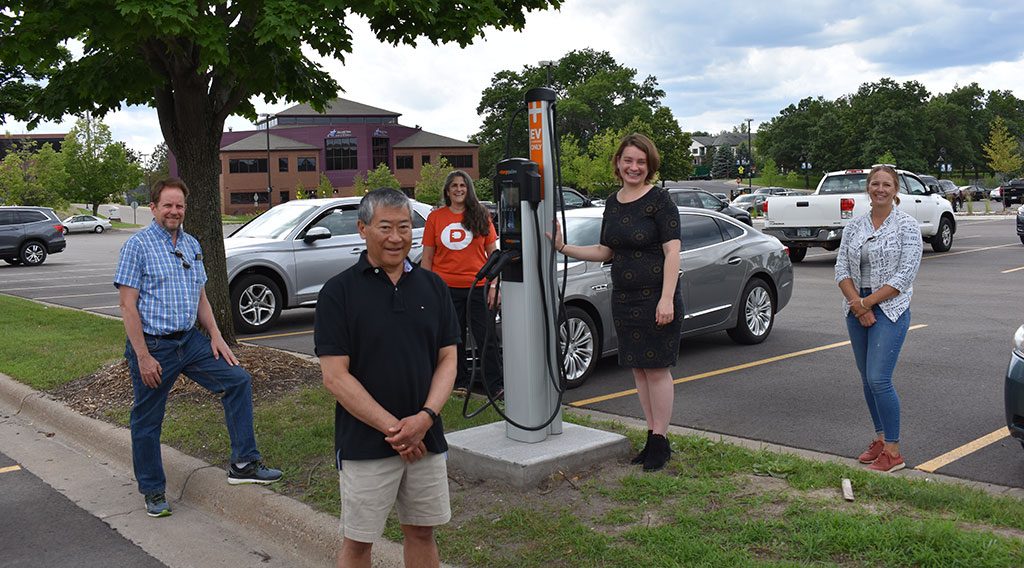 Last summer, the Great Plains Institute facilitated a project to accelerate the adoption of electric vehicles (EVs) through public EV charging installations in the Minnesota cities of Shoreview and White Bear Lake in partnership with employees from
 In working towards a Midwestern clean fuels policy, there’s a great deal of interest in compensating farmers providing feedstock for fuels for the greenhouse gas (GHG) reduction benefits they’re creating on the farm. Research from South Dakota State University is playing an important role in informing those discussions.
